
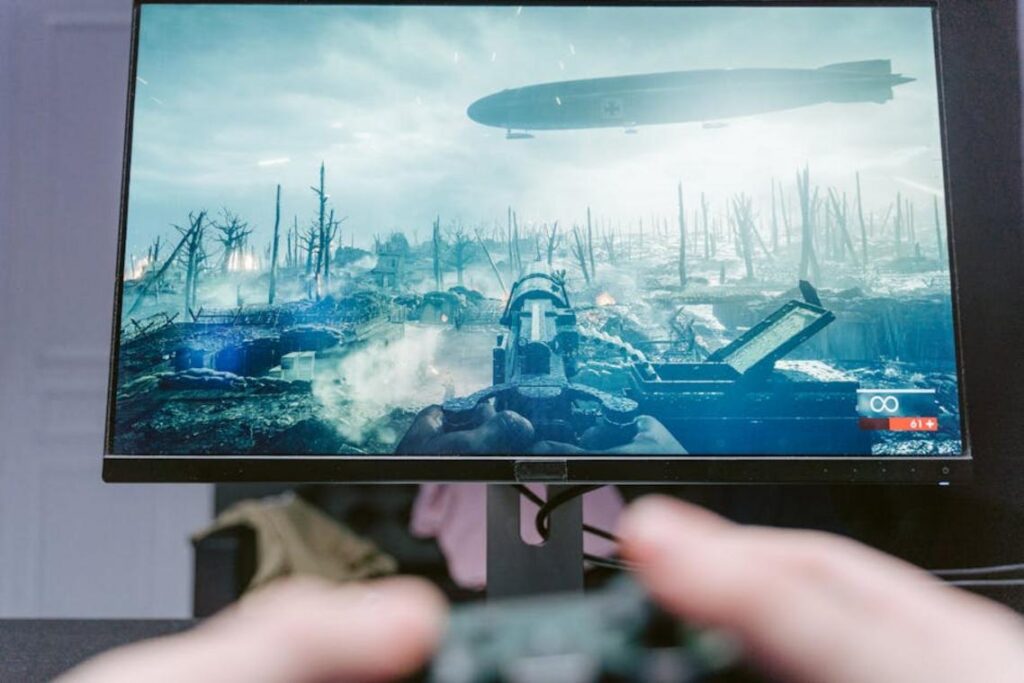
I’ve played enough multiplayer strategy games to know that most of them don’t respect your time or your brain.
You’re here because you want something different. You’re tired of battle royales and shooters that reward fast fingers over smart thinking. You want a game where your decisions actually matter.
The problem is finding one. The market is packed with games that call themselves strategy but really just want you to click faster than the other guy.
I’ve spent thousands of hours commanding armies and building empires across every major multiplayer strategy game out there. I know which ones have real depth and which ones fall apart after a few matches.
This guide will show you which virtual war games to play altwaygamers based on what kind of strategic challenge you’re after. I’ve broken them down by category so you can find exactly what fits your style.
No fluff. No games that waste your time with shallow mechanics dressed up as strategy.
Just the multiplayer strategy games that will keep you thinking, planning, and coming back for more.
Defining Greatness: The Core Pillars of Multiplayer Strategy
What makes a multiplayer strategy game actually great?
I’ve played hundreds of them. From the classics to the latest releases covered at when is the summer game fest 2024 altwaygamers events.
Most people confuse complexity with depth. They’re not the same thing.
Strategic depth means you have real choices. Multiple paths to win. Different builds that actually work. You can outthink your opponent in ways they didn’t see coming.
Complexity is just a bloated tutorial and 50 different resource types that don’t matter.
Chess is deep. It’s not complex.
The best multiplayer games force you to react to other players. You can’t just execute your perfect build order and win. Someone will attack your trade routes. Another player will form an alliance against you. Your carefully planned expansion gets blocked by early aggression.
That’s when which virtual war games to play altwaygamers becomes an interesting question. Because the answer changes based on who you’re playing with.
Replayability matters too. I don’t want to play the same opening 100 times. Give me different factions. Random map generation. Scenarios that create new problems to solve.
And here’s something most reviewers ignore: the community actually matters. A toxic player base kills even the best game design. So does predatory monetization that makes you pay to stay competitive.
The Grand Strategists: Forging Empires Over Weeks
You know that feeling when you finish a game in three hours and think “that was fun, I guess”?
Grand Strategy Games don’t work that way.
These are the games where you start a campaign on a Tuesday and you’re still playing the same save file three weeks later. Where every decision ripples forward through centuries. Where you don’t just play a character, you shape entire civilizations.
I’m talking about Grand Strategy Games and 4X titles. The names stand for eXplore, eXpand, eXploit, and eXterminate (yes, the capitalization is weird). But what they really mean is this: you’re building something that lasts.
Some people say these games take too long. That the learning curves are too steep. That you need a PhD just to understand the interface.
Fair points. But here’s what they’re missing.
The complexity is the point. The time investment is what makes your victories actually mean something.
Start with Civilization VI if you’re new to this. It’s the most approachable entry point I can recommend. You guide a civilization from the Stone Age to the Space Age, and the game doesn’t punish you for learning as you go.
What I like about Civ VI is how it lets you win your way. You can conquer the world militarily (the obvious choice). Or you can win through culture, science, religion, or diplomacy. I’ve seen players at Altway Gamers spend 40 hours on a single playthrough just to launch that final Mars colony.
Try Crusader Kings III if you want stories you’ll actually remember. This one’s different. You’re not playing a nation. You’re playing a dynasty.
Your character will die. Probably sooner than you want. Then you play as their heir, who might be brilliant or might be an incompetent drunk (genetics are unpredictable). The multiplayer turns into a soap opera. Alliances form over marriages. Betrayals happen because someone’s cousin has a claim to your throne.
I watched a friend spend two hours negotiating a marriage alliance only to have his character assassinated by his own son. He wasn’t even mad. He was impressed.
Go with Stellaris when you’re ready for space. You design your own alien species from scratch. Decide if they’re peaceful traders or genocidal robots or psychic hiveminds. Then you send them out to colonize the galaxy.
The scale gets absurd. You’re managing dozens of star systems. Forming federations with other empires. Fighting wars that span multiple spiral arms. When you’re deciding which virtual war games to play altwaygamers, Stellaris offers the biggest sandbox.
What makes it special in multiplayer is how player empires create their own political reality. One game might have three democratic federations competing peacefully. Another might have one player running a machine intelligence that’s slowly converting everyone into cyborgs.
These games ask for your time. But they give you something back that most games don’t.
The feeling that you built something that mattered.
The Real-Time Tacticians: Winning Battles in Minutes
Real-Time Strategy games don’t give you time to think.
You’re building bases, managing resources, and commanding armies all at once. While your opponent does the same thing. Faster than you, if you’re not careful.
It’s not turn-based. There’s no pause button in multiplayer. Every second counts.
Some people say RTS games are too stressful. They argue that having to manage so many things simultaneously just isn’t fun. And honestly, they have a point. Not everyone wants to track their actions-per-minute while trying to enjoy a game.
But that’s exactly what makes RTS so compelling.
The pressure creates moments you can’t get anywhere else. When you hold off a rush with perfect micro. When your economy outpaces theirs and you know you’ve already won. When a single decision in the first five minutes determines the next thirty.
If you’re wondering which virtual war games to play altwaygamers, these three define what competitive RTS looks like right now.
StarCraft II remains the benchmark. Blizzard built three factions that play completely differently. Terran, Protoss, and Zerg each demand their own strategies and muscle memory. The skill ceiling is absurd (pro players hit 300+ APM regularly). But that depth is why it’s still pulling viewers on Twitch years after release.
Age of Empires IV takes a different approach. It keeps the classic build-and-conquer formula but adds asymmetrical civilizations that actually feel distinct. The English play nothing like the Mongols. New players can jump in without feeling lost, which makes it one of the better entry points if you’ve never touched competitive RTS before.
Then there’s Company of Heroes 3. This one ditches massive armies for squad-based tactics. Your infantry uses cover. Flanking matters. Positioning a machine gun nest correctly can hold an entire sector. It rewards smart plays over fast clicks, which means you’re thinking about WWII tactics instead of just building more units than the other guy.
The Cooperative Commanders: Strategy Through Teamwork
Not every strategy game needs to be about crushing other players.
Some of us want the challenge without the cutthroat competition. We want to build something together instead of tearing each other down.
That’s where cooperative strategy games come in.
These aren’t your typical team-versus-team setups. You’re working with other players against AI opponents or massive logistical puzzles that would break a solo player.
Foxhole takes this concept further than most games dare.
Picture hundreds of players on a single persistent continent. You’re not just fighting. You’re managing supply chains, building fortifications, and coordinating attacks across multiple fronts.
Some players spend entire sessions just running supplies to the front lines (and honestly, that’s where battles are won or lost). Others focus on construction or intelligence gathering.
It’s less about individual skill and more about whether your team can keep the war machine running.
Then there’s Northgard.
This one puts you and your teammates in control of different Viking clans. Each clan has unique strengths. You’ll need all of them to survive harsh winters and defeat the mythical creatures that want you dead.
One player might focus on food production while another builds military strength. When winter hits, you either worked together well or you didn’t. The game doesn’t care about excuses.
Here’s the real difference between these games and traditional PvP strategy titles.
In competitive games, you’re constantly second-guessing everyone. Is that alliance real or temporary? Will they backstab you the moment it’s convenient?
In co-op strategy, you can actually trust your teammates. The challenge comes from the game itself, not from watching your back every second.
If you’re wondering which virtual war games to play altwaygamers, consider what kind of experience you actually want. Do you thrive on outsmarting human opponents? Or do you prefer the satisfaction of building something that lasts?
Both are valid. But cooperative strategy offers something you won’t find in head-to-head matches: the chance to win together.
Your Next Campaign Awaits
I’ve spent countless hours testing multiplayer strategy games to find the ones worth your time.
We’ve covered empire-building epics, fast-paced tactical skirmishes, and collaborative challenges that’ll test your strategic thinking. Each subgenre offers something different.
You came here searching for a mentally stimulating multiplayer game. That search ends now.
Understanding what makes each game unique helps you pick the right fit. Some games reward long-term planning while others demand split-second decisions. You need to know which style matches your preferences.
Here’s what I want from you: Drop a comment below with your favorite multiplayer strategy game that didn’t make our list. Tell me why it deserves recognition.
The gaming community grows stronger when we share what we’ve discovered. Your recommendation might be exactly what another reader needs to find their next obsession.
which virtual war games to play altwaygamers has you covered with honest takes on what’s worth playing. We test these games so you don’t waste time on titles that don’t deliver.
Your next campaign is waiting. Now go find it.
 polar_marsh founded Altway Gamers to unite the community through a blend of technical insight and cultural depth. By covering everything from esports and multiplayer updates to narrative reviews and real-world strategies, Speroellis has established a platform where competitive play meets meaningful storytelling. Under this leadership, Altway Gamers continues to empower players to stay informed, connected, and ahead of the game.